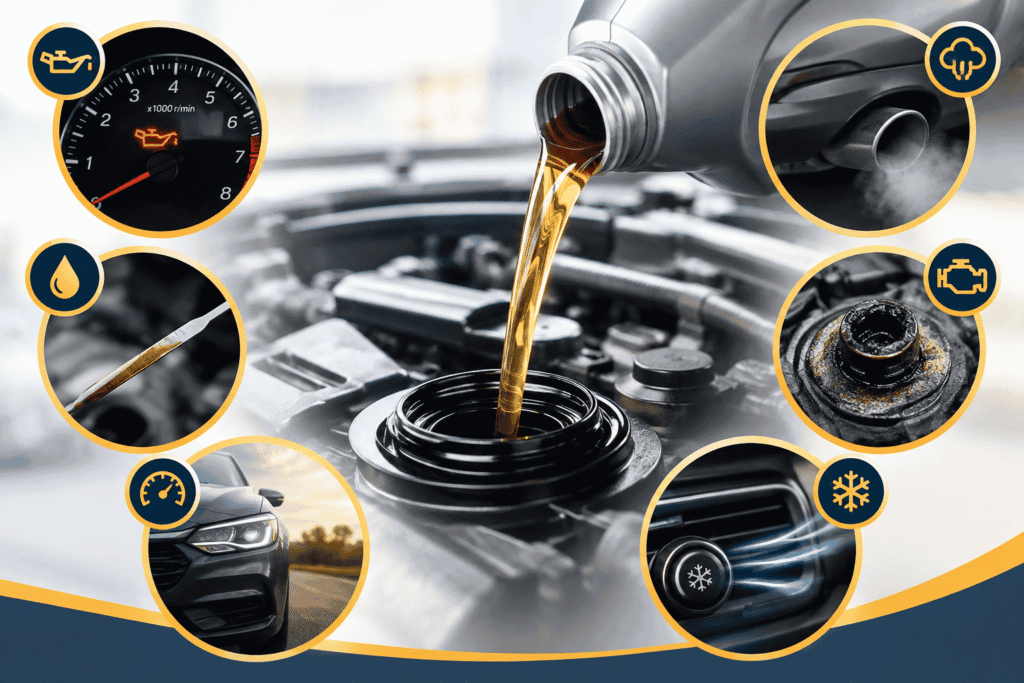
Many drivers wait until their scheduled service before thinking about engine oil. However, your car can sometimes give you warning signs that the oil needs attention sooner.
Engine oil gradually loses its effectiveness as it becomes contaminated and breaks down. Here are seven common signs that your vehicle may need an oil change.
1. The Oil Warning Light Comes On
One of the clearest warning signs is an illuminated oil warning light on your dashboard.
This can indicate low oil pressure or another oil-related problem. If the light comes on while driving, don't ignore it. Stop safely and check the vehicle as soon as possible.
2. Your Engine Sounds Louder
Engine oil provides lubrication between moving components. When the oil becomes old, dirty, or insufficient, friction can increase.
You may notice unusual ticking, knocking, or louder engine sounds.
3. The Oil Looks Very Dark
Fresh engine oil is usually relatively clean and has a consistent appearance. Over time, it becomes darker as it collects contaminants.
Dark oil doesn't always mean it needs immediate replacement, but if it is extremely dirty or you cannot remember your last oil change, it is worth having it checked.
4. Your Car's Fuel Economy Gets Worse
Old or degraded engine oil can increase friction inside the engine. In some situations, this can contribute to reduced fuel efficiency.
If your vehicle suddenly starts consuming more fuel than usual, an oil and general maintenance check may be worthwhile.
5. You Notice an Oil Smell
A strong oil smell inside or around the vehicle can indicate an oil leak or another mechanical issue.
If you notice a burning-oil smell, have the vehicle inspected rather than simply topping up the oil.
6. The Engine Runs Roughly
If the engine feels rough, vibrates more than usual, or doesn't feel as responsive, several issues could be responsible. Engine oil condition is one of the things that should be checked.
7. It's Been Too Long Since Your Last Service
Sometimes there are no obvious warning signs.
That's why following your vehicle manufacturer's recommended oil-change schedule is important.